Repair or replace
Thermopane, parts or a whole new window: how to decide
Find what failed before choosing a fix. When frame and sash are solid, a new thermopane, a new part or fresh weatherstripping usually does the job, and defogging is there if the view is what bothers you. A new window earns its place when the frame is soft or leaking, or several things fail at once. Only a full replacement, frame included, can earn the Efficiency Nova Scotia rebate.
Start with what failed: glass, seal, hardware, sash or frame
A window is several parts wearing out at different speeds. Before anyone says replacement, work out which part is letting you down.
- The glass. A crack or a blown pane. The window around it may be fine.
- The seal. Fog trapped inside the glass, out of reach of any cloth. The thermopane, which glass shops call a sealed unit, has lost its seal.
- The hardware. A crank turning without moving the sash, a lock that no longer catches, a sash that slides back down.
- The sash. On older wood windows: cracked putty, loose joints, paint lifting at the bottom rail.
- The frame. Soft wood at the sill, stains on the wall below, air coming round the outside edge.
Nearly half of HRM's homes were built before the 1980s, and another big wave went up in the 80s and 90s, so plenty of thermopanes are reaching the age when seals commonly give out. A fogged unit on its own says nothing about the frame around it.
We connect you with an independent local glass professional who sees the window and names the culprit. That pro quotes and does the work; we pass the request on and make sure you hear back.
When a new thermopane is the smart fix
Fog inside the glass tells you the seal has gone, not necessarily the window. There are three ways to handle it, and we don't take sides:
Defogging cleans and dries the space between the panes without replacing anything. It suits someone who mainly minds the view. Local pros disagree on how well it lasts, so ask what the work covers.
A new thermopane is built to your measurements and fitted into the sash or frame you already have. It suits a window whose frame and hardware are still sound; the foggy thermopane page explains how it's done.
A new window replaces frame, sash and glass. It's the answer when the frame is going as well, and it's the only one of the three that can earn a rebate.
One honest note: thermopanes are built to order after the measuring visit, so expect a gap before the fitting. The window stays usable meanwhile, fog and all.
When hardware or weatherstripping is enough
A draft at the sash is often a worn part, not a worn-out window. Weatherstripping flattens. Casement cranks strip. Locks stop pulling the sash tight to the frame, and the wind finds the gap. These are usually small jobs, and window repair lists the common ones.
Pros who work near salt water often mention hardware and rollers wearing faster. Much of Sackville and Cole Harbour was built in the era of the sliding patio door. A slider that grinds or won't latch is more often a roller, track or lock job than a new door; sliding door repair explains how to tell the difference.
Wood sash: restore before you rip out
Old wood windows tend to look worse than they are. Cracked putty, flaking paint and a rattle in a northwesterly are all repairable, and the wood underneath is often sound. Fog, rain and a long run of freeze-thaw days each winter are hard on putty here, so it's usually the first thing to go.
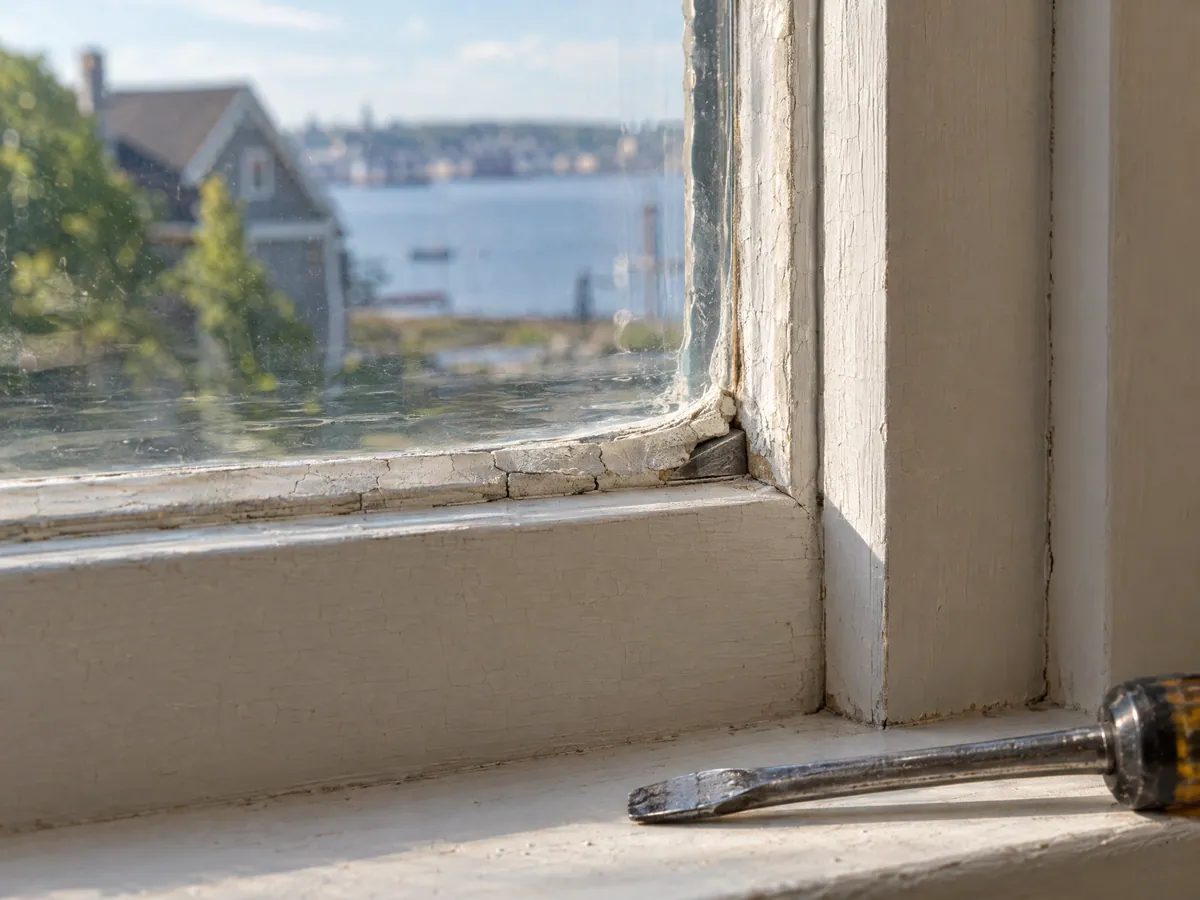
A sash restorer can reglaze, splice new wood into a rotten rail, free a sash that's been painted shut and add weatherstripping. Paired with a good storm window, a restored sash can be a comfortable window again. Wood window repair covers what the work involves.
How long a wood window lasts comes down to condition and upkeep, not the calendar: paint and putty kept up, water kept off the sill. On a registered heritage property or in one of HRM's heritage conservation districts, the decision may not be yours alone, and the guidelines lean toward keeping and repairing original wood windows. The heritage district guide explains how that works.
When full replacement wins
New glass can't rescue a failing frame. Replacement usually makes more sense when:
- the wood at the sill or frame crumbles, or stays damp days after rain
- water gets in around the frame in wind-driven rain, not just through the glass
- several things fail in one opening: a fogged unit, a stripped crank and a soft sill together
- parts for an older window can no longer be found
- you're doing an energy upgrade anyway and want the rebate in play
The quote will depend on whether the new window fits inside the existing frame (an insert) or everything comes out to the rough opening (full-frame). Replacement windows explains both. Replacing a window the same size in the same place needs no HRM building permit, though changes to a bedroom window should keep egress in mind; see HRM's home improvement permits.
Selling soon?
Realtors here often suggest a few fixes before listing, and windows come up. Buyers and home inspectors notice fogged thermopanes, cracked panes, cranks that don't turn and soft sills. Dealing with those is usually proportionate. Replacing every window before you sell is a bigger call: you carry the cost and the wait, and the next owner gets the benefit. Ask for a quote on the specific things an inspection would flag, and decide from there.
Rebates and grants: what each option qualifies for in Nova Scotia
This is where the choice gets lopsided. The small jobs earn nothing back, and only the biggest one can.
- Defogging, new thermopanes, hardware and weatherstripping: no rebate. Efficiency Nova Scotia's rebate guide requires the whole window or door, frame included, to be replaced.
- Full replacement: can qualify if the new units are ENERGY STAR rated in Canada and the work happens between an initial and a final home energy assessment, within the program's time limit. The ENERGY STAR stickers stay on until the final assessment, so tell the installer.
- Registered heritage properties: HRM's heritage grants exclude vinyl and aluminum windows. The latest intake has closed and a new program is expected; watch HRM's heritage incentives page.
- Federal help: no general window grant any more; Natural Resources Canada lists the homeowner grant as closed.
- HalifACT: HRM's home energy upgrade financing covers heat pumps, insulation and water heaters, not windows.
With a single fogged thermopane in a healthy frame, the rebate rarely changes the answer. When most windows are failing, get both quotes and do the arithmetic with the program rules in hand.
Questions to ask any contractor before you sign
- Is this a new thermopane, an insert window or a full-frame replacement?
- If I want the rebate, are the units ENERGY STAR rated in Canada, and will the stickers stay on?
- Is the quote written and itemized, and does it include HST?
- What does the warranty cover, and who do I call if a unit fogs later?
- If the job changes once the old window is out, how will I hear about it before the price changes?
- When will I hear back?
Keep the written quote and check the bill against it before paying. If someone sold you windows at your door, Nova Scotia requires direct sellers to be licensed, and one-time contracts signed that way come with a cooling-off period. The province's direct seller page sets out your rights.
Checklist: photos and measurements to gather
- A photo of the whole window, inside and out if you can reach safely
- A close-up of the trouble spot
- The visible glass measured across and up (the pro will measure again)
- Any printing on the spacer bar between the panes, or a stamp in the glass
- The room and floor, and whether a storm window sits in front
- Whether the house is in a heritage district, on the heritage register, or in a condo
Send those with a quote request. With good photos, the pro who picks up your request can often sort a glass job from a parts job or a new window. The other guides for HRM homes cover storm season and heritage rules.
Frequently asked questions
Can a thermopane that's lost its seal be repaired?
Not repaired as such, but it can be dealt with without replacing the window. Defogging clears the view. A new thermopane, made to measure, replaces the failed glass unit and keeps the frame and sash. If the frame is going as well, a whole window makes more sense. The foggy thermopane page compares all three.
How do I fix a foggy window without replacing it?
First check where the fog is. If it wipes off, it's condensation, and better airflow or lower indoor humidity is the fix, not glass. If it's between the panes, you can have the unit defogged or replaced with a new thermopane in the same frame. Both keep the window. Ask whoever quotes defogging what it covers and how it tends to hold up.
Which costs less: new glass or a new window?
For a single window in a sound frame, new glass is usually the smaller job, since nothing structural changes. The price depends on size, glass type, shaped or standard, and access, especially upstairs. A whole window adds the frame, trim and installation. When several windows are failing, compare both quotes, because the Efficiency Nova Scotia rebate only applies to full replacement.
Does repairing windows qualify for any rebate in Nova Scotia?
Not that we know of. Efficiency Nova Scotia's rebate covers ENERGY STAR windows and doors replaced with their frames, between two home energy assessments, so repairs, defogging and new thermopanes don't qualify. On registered heritage properties, HRM's heritage grants have supported wood window conservation; a new program is expected. Check the ENS rebate guide for current rules.
Does doing every window in one go save money?
Sometimes, per window, because there's one measuring visit and one installation. But it only saves money if the windows actually need replacing, and many HRM houses have a few failing units beside several sound ones. Doing the failing windows first and the rest later, in the same style, is a reasonable plan. Ask for a quote both ways and compare.
How long do wood windows last?
It depends on condition and upkeep far more than age. A wood sash that's kept painted, reglazed when the putty cracks and kept dry at the sill is a very different window from one left bare to the weather. If the wood is sound, restoration is often possible even when the window looks rough. Wood window repair explains what's involved.