Window hardware
Hardware and weatherstrip repairs that keep your windows working
A window that won't crank, stay up or lock usually has one worn part, and swapping it is often the whole job. Around HRM that's mostly operators, balances, latches and weatherstripping on aluminum and early vinyl windows from the 70s to the 90s. We connect you with an independent pro in HRM who tracks down the part, prices it and fits it.
- Cranks, balances, locks and latches
- Weatherstripping and caulking
- Keeps the window you already own
Cranks
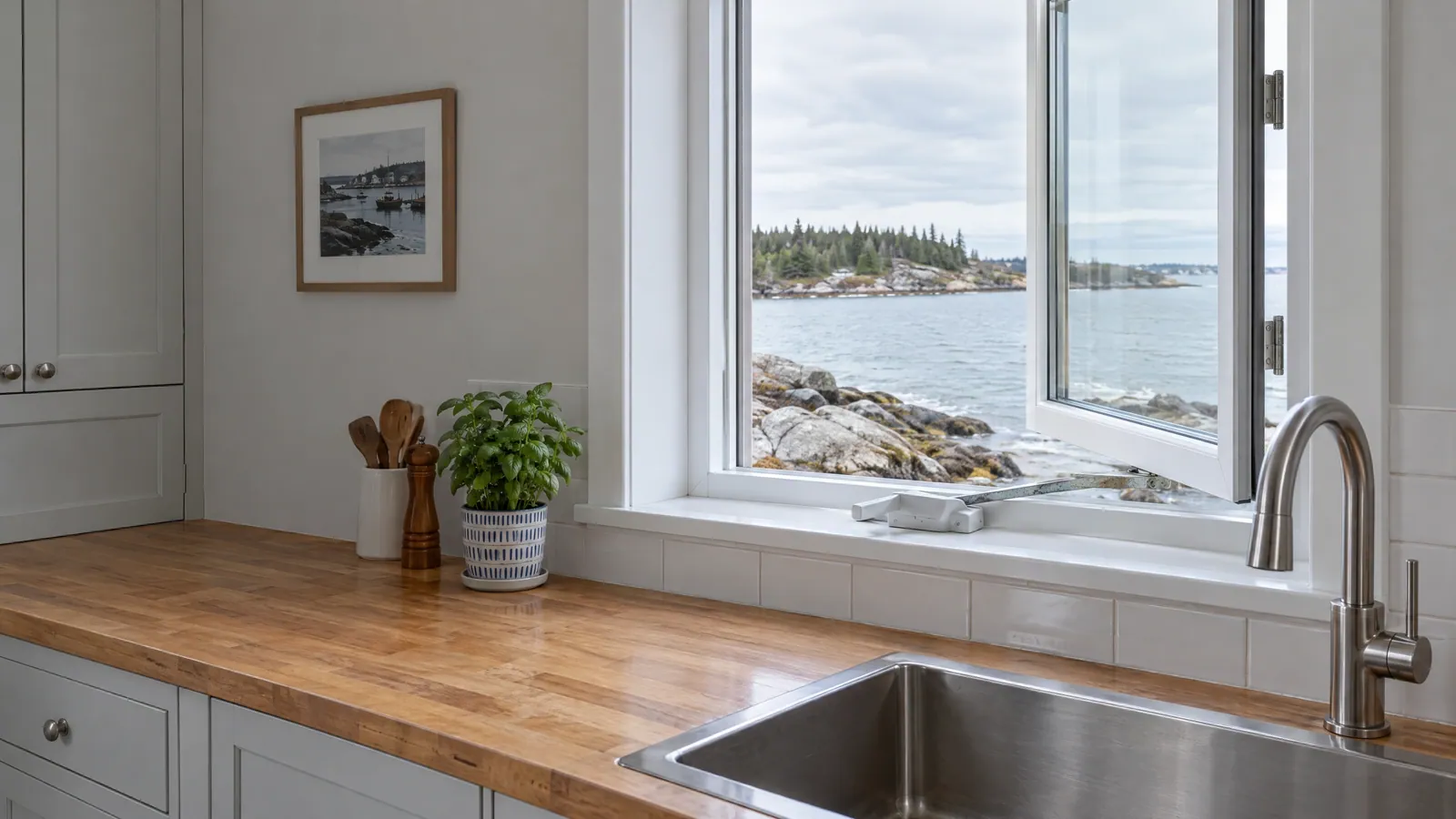
Casement and awning cranks that slip or seize
Casements and awnings open on a crank, which the trade calls an operator: a small gearbox that pushes an arm. A handle that spins freely has stripped; a stiff one usually means dry or corroded hinges.
Leaning on a stiff handle is how gears get stripped. A pro can lubricate the hinges, fit a new operator, or replace hinges if the sash drags. Near the harbour and the Basin, ask for stainless or coated parts where they're made.
Hung windows
Hung windows that drop or stick: balances and tilt latches
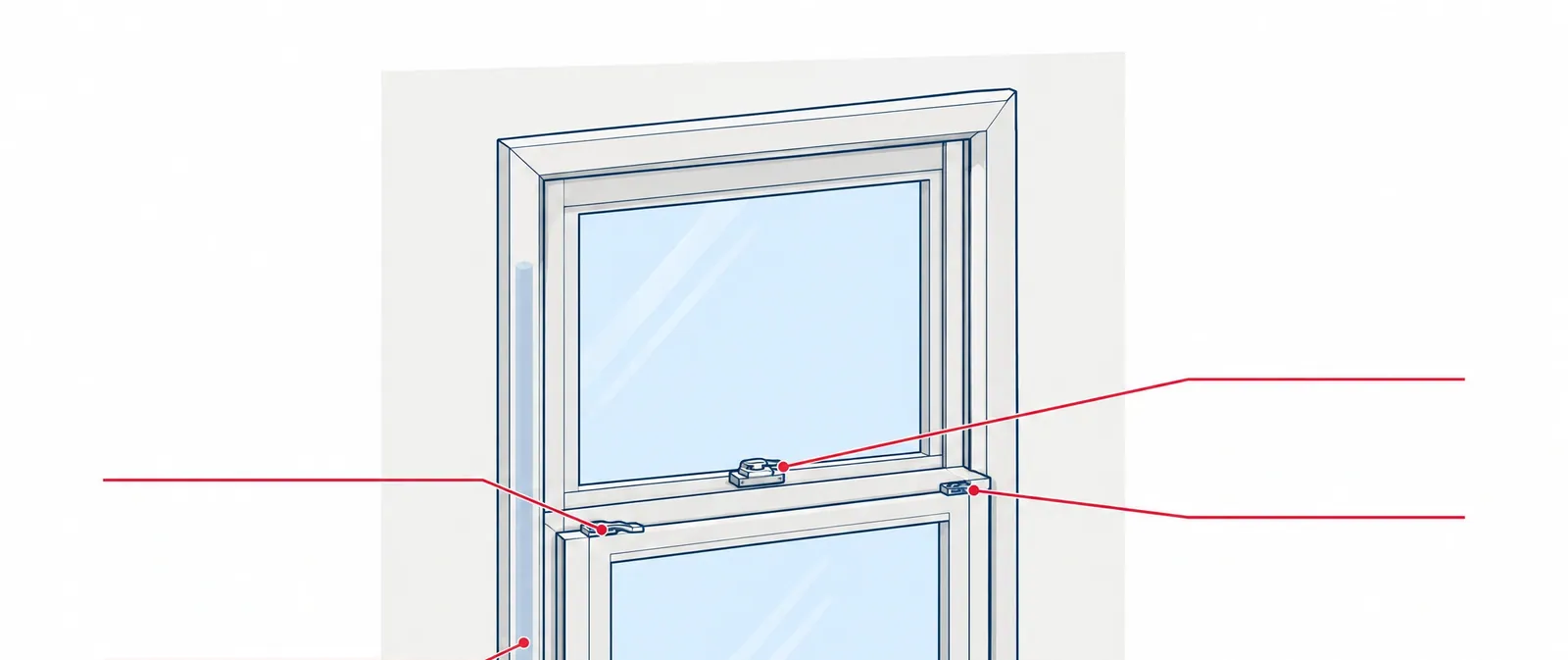
Single- and double-hung sashes ride on balances hidden in the side jambs. When a sash won't stay open, or slams shut, a balance has broken or come loose.
Balances can be replaced once the sash tilts out. Tilt latches, the small slides at the top of the sash, crack or stick. A sash that binds may only need clean tracks. Old wood sash on ropes and weights is a different job: see wood window repair.
Drafts and leaks
Drafts and leaks: weatherstripping and perimeter caulking
“Seal” means three different things on a window, and it helps to know which one has gone.
Weatherstripping is the soft strip the sash closes against. Once flattened or torn, it lets air and rain past a closed window. Replacing it is routine and often cures a draft.
Perimeter caulking is the outside bead where the frame meets siding or brick. Cracked, it lets water behind the trim.
The thermopane's edge seal is the third. When it has lost its seal the glass mists between the panes, and that's a glass job: see foggy thermopanes.
Locks and hinges
Locks, keepers and hinges
Small parts, but they decide whether a window closes tight.
Sash locks and keepers
The cam lock on a hung window pulls the sashes together as well as locking them. A cracked lock leaves a gap that whistles in a stiff wind.
Casement locks and handles
Casement locks often pull the sash in at several points. When one catch breaks, the sash seals only partway.
Hinges and stays
Hinges and awning stays carry the sash's weight. Bent or corroded, they make it drag or sag. Once matched, they're a straightforward swap.
Honest limits
Where a repair stops making sense
Parts only make sense on a window that's otherwise sound. If the sill is rotting or the sash is warped, a repair is money spent on a window that's still failing.
The other limit is parts that are no longer made. If several windows are at that stage, compare repairing them with replacing the windows; the repair or replace guide sets out both sides.
What affects the quote
What affects the cost of a window repair
Priced on the part and the visit. Small jobs are worth asking about.
- The part itself, and how hard it is to find or match
- Whether other windows in the house have the same fault
- Window type: casement, awning, slider or hung
- Access, such as upper storeys or windows over a deck
- Weatherstripping or caulking done at the same visit
Photograph the part with the sash open and note the window type.
Local weather
Wind-driven rain and window perimeters in Halifax
Heavy rain and strong wind arrive together here often enough to test every window perimeter. Sideways rain finds a gap in the caulking, a blocked weep hole in a slider track, or weatherstripping that no longer meets the sash.
Check weep holes and caulking each fall, before storm season. If summer left the screens torn, screen repair can go on the same request.
Renting? Tell your landlord in writing. Under HRM's minimum-standards by-law, a rental's windows are meant to keep the weather out and work properly; landlords can see the property managers page.
Questions
Window repair questions
Explore your options
Related window work
Local pros repair cranks, balances and weatherstripping across HRM, including Dartmouth, Bedford, Cole Harbour, Sackville and Spryfield.
Tell us which window and what won't move
Casement, awning, slider or hung, plus a photo of the part. A local hardware pro gets it, and we follow up if you haven't heard back.